SPECIAL OFFER!
Time left until the end:


Choose a service
KET tests
KET course
Exam accelerator
First aid course
Regitra routes map
B, B1, BE Categories
Vehicles are divided into different driving categories. Depending on what type of vehicle(s) you want to drive, choose the appropriate category. Category B, which usually includes passenger cars, is the most popular among drivers. Categories B1 and BE are also categories of passenger cars that differ from category B in terms of driver requirements, vehicle capacity, or trailer weight. With these categories, you will be able to drive cars with automatic or manual transmissions. Let's take a look at the features and differences between categories B, B1, and BE.

Ekis Paprastai
2026 September 1
8 min. read
For most drivers, the first encounter with a driver's license begins with Category B, but it is not always clear how it differs from Categories B1 or BE. Some seek the opportunity to start driving earlier, while others plan to drive a car with a trailer, so it is important to understand the rights each of these categories grants and the requirements for obtaining them.
Although all three categories are related to light vehicles, their purposes differ. Category B1 allows driving certain light vehicles from a younger age, Category B grants the right to drive most everyday cars, and Category BE is required when planning to drive with heavier trailers.
In this article, we will discuss the main differences between Categories B, B1, and BE, the requirements for them, age restrictions, training costs, and other important information that will help you choose the most suitable driving category.
What are Categories B, B1, BE and how do they differ?
Category B
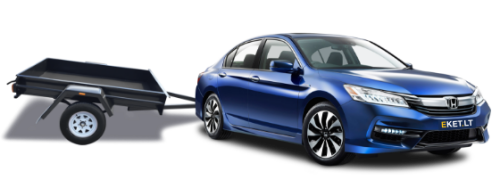
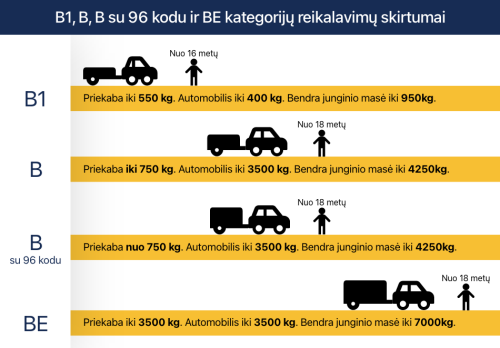
Category B includes cars with a maximum permissible mass not exceeding 3,500 kg and designed to carry no more than eight passengers, excluding the driver. These cars can be combined with a trailer with a maximum permissible mass not exceeding 750 kg or a trailer with a maximum permissible mass exceeding 750 kg, but the total maximum permissible mass of the combination must not exceed 3,500 kg. To drive Category B vehicles with a trailer whose maximum permissible mass exceeds 750 kg and the total maximum permissible mass of the combination is 3,501–4,250 kg, a code (96) must be entered in the driver's license. Category B vehicles can be driven from the age of 18.
A theoretical exam is required to obtain a Category B driver's license. The theoretical exam questions are composed of similar questions presented in the KET tickets. KET tickets help ensure that candidates have the necessary theoretical knowledge about traffic rules and safety, which are tested in both the theoretical and practical exams. Only after successfully passing the theoretical exam can candidates take the practical exam and obtain a Category B driver's license. If you plan to take the Category B driving exam, we recommend learning traffic rules by solving our mock Regitra KET tickets for free.
Category B1
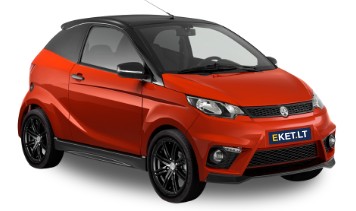
Category B1 can be obtained by individuals from the age of 16. Category B1 allows driving only smaller and less powerful cars than Category B. Individuals who have obtained the right to drive Category B1 cars can choose vehicles with a maximum design speed greater than 45 km/h and/or an engine displacement greater than 50 cm3, with an unladen mass not exceeding 400 kg. The mass of vehicles intended for carrying goods must not exceed 550 kg. Upon reaching the age of 18, B1 category holders must retake exams to obtain Category B.
Category BE
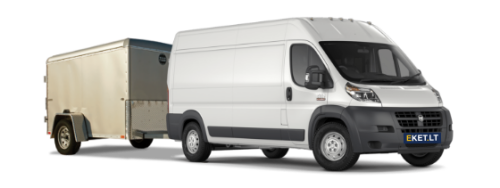
Category BE includes a Category B car with a trailer whose maximum permissible mass is not greater than 3,500 kg. This means that the total mass of the combination cannot exceed 7,000 kg. Like Category B, Category BE can be driven by individuals from the age of 18.
Thus, the main differences between Categories B, BE, and B1 are that Category B, for light cars, can be driven by individuals from the age of 18, Category B1 from the age of 16, and Category BE includes a Category B car with a trailer.
Prices for Categories B, B1, BE
The cost of obtaining rights for Categories B, B1, and BE includes common aspects, and the cost of obtaining these categories differs from the requirement for mandatory practical driving hours.
Category B will cost from ~530 EUR. This category includes 30 academic hours of practical driving.
Category B1 will cost from ~430 EUR. This category includes 20 academic hours of practical driving.
Category BE will cost from ~350 EUR. This category includes 10 academic hours of practical driving.
The cost of obtaining Categories B, B1, BE includes 5 common aspects listed below:
Learning driving theory. Its cost depends on whether you will study the theory externally (independently) or with a group. If you study driving theory independently, you will not need to pay extra for this part, but if you choose to study with a group, theory lessons will cost up to 50 EUR. Some driving schools offer both remote and contact theory lessons, so the price varies depending on the choice.
When studying externally with the help of EKET.LT KET test plans, you will be entitled to 7 days of unlimited solutions now for only 5.40 EUR, and when choosing 14 or 31-day plans, they will also include individual driving instructor consultation and group remote lectures. The 14-day package on EKET.LT now costs 7.70 EUR, and the 31-day package costs 14.90 EUR. You can try 200 question KET tests for Category B for free.
Learning driving practice. Its cost varies depending on whether the car you want to learn to drive with has an automatic or manual transmission and the required driving hours for the category. Practical driving courses for Category B, depending on the driving school, can cost up to 500 EUR, for Category B1 up to 400 EUR, and for Category BE up to 320 EUR. Taking the test with an automatic transmission will cost about 30 EUR more than with a manual transmission.
Taking the theory exam at "Regitra". The cost of this theoretical knowledge test (for Categories B, B1, BE) is 10 EUR.
Taking the practical exam at "Regitra". Taking the practical exam (for Categories B, B1, BE) with a "Regitra" vehicle will cost 41.26 EUR, and taking it with your own vehicle will cost 34.54 EUR (only when taking it with a vehicle adapted for physical disability). The exam prices (theory/practical) at "Regitra" are the same regardless of whether you are taking the test for Categories B, B1, or BE.
Other possible expenses. Additional costs may include a health check (up to 40 EUR), a first aid course certificate (up to 30 EUR), and additional driving lessons to reinforce knowledge. Additional lessons, depending on the school or instructor, cost about 20 EUR/academic hour.
It is important to mention that the cost of obtaining rights for all categories greatly depends on individual abilities; some may succeed in passing the exams on the first try, while others may need to pay for additional driving lessons or exam retakes.
Test your skills by solving EKET.LT tests
Try KET tests!
Prepare for the Regitra theory exam with EKET Tickets

9/10 EKET students pass on the first try!
What are the requirements for Categories B, BE, B1?
The requirements for Categories B, B1, and BE differ based on the maximum permissible mass of the car or trailer.
Requirements for Category B
Category B includes cars with a maximum permissible mass not exceeding 3,500 kg. To drive Category B vehicles with a trailer whose maximum permissible mass exceeds 750 kg and the total maximum permissible mass of the combination is 3,501–4,250 kg, a code (96) must be entered in the driver's license. If the car is lighter than the maximum 3,500 kg weight, the trailer can be heavier accordingly, for example, if the car weighs 2,500 kg, the trailer can weigh 1,750 kg. This code (96) is entered only after passing the corresponding practical driving exam.
The right to obtain a Category B driving license can be acquired by individuals from the age of 18. Driving theory and practice for Category B can be started earlier, at 17 years, and the theory exam at "Regitra" can be taken from 17 years, while the practical exam from 18 years of age.
To take the Category B theory exam at "Regitra", you must present a driver's health certificate and a first aid course certificate.
If you previously held Category B1 rights, upon reaching the age of 18, you must retake the exams to obtain Category B.
Requirements for Category B1
Category B1 includes cars with an unladen mass not exceeding 400 kg.
The right to obtain a Category B1 driving license can be acquired by individuals from the age of 16. Driving theory and practice for Category B1 can be started earlier, at 15 years, and the theory exam at "Regitra" can be taken from 15 years, while the practical exam from 16 years of age.
To take the Category B1 theory exam at "Regitra", you must present a driver's health certificate and a first aid course certificate.
Requirements for Category BE
Category BE includes a Category B car and a trailer with a maximum permissible mass not exceeding 3,500 kg.
The right to obtain a Category BE driving license can be acquired by individuals from the age of 18.
After obtaining Category B (C or D) and having the corresponding driver's license, no special privileges are granted, and you must fully prepare for the Category BE theoretical and practical exams.
To take the Category BE theory exam at "Regitra", you must present a driver's health certificate, a first aid course certificate, and a driver's license if you have one from before.

Frequently asked questions
Here you will find answers to common questions. If you did not find your question, click Contact us and we will gladly help.

Did not find an answer?
Contact us and we will help!
Information updated 2026-09-01
Related articles
2026 September 3
4 min. read
Vehicle Categories and Their Classification (Descriptions)

Ekis Paprastai
2026 September 1
5 min. read
Driving categories 2026: Descriptions, requirements, notes
Ekis Paprastai
2026 September 3
7 min. read
Categories A, A1, A2, AM
Ekis Paprastai

2026 March 7
2 min. read
Braking distance/stopping distance
Ekis Paprastai
Other articles
Car dashboard symbols and their meanings
Traffic fines: speeding, driving without inspection and other violations 2026
Driving with the M Plate: Requirements, Opportunities, Pros and Cons, FAQ
Regitra questions – 20 questions before the practical exam 2026
KET Speed Table 2026 PDF (permitted driving speeds)
C kategorija
Driving Lessons: Requirements, Where to Learn, Price, FAQ
Best KET tests (tickets) 2026
Lost driver's license: recovery, retaking exams, required documents
(NON) Critical Errors at Regitra: Possible Error Types 2026
When do you need to retake your driving license? [2026 Information]
Regitra Exam Fees – Theory and Practical License Costs
Beginner Driver: License, Tips, Traffic Violations



EKET.LT - More than just KET tests
EKET.LT is an innovative learning system helping you prepare for the Regitra theory exam. You will find not only KET tickets and tests here, but also constantly updated content, learning statistics, recommendations and the option to consult with an experienced instructor. Learn more effectively, track your progress and get ready to pass on the first try.
Copying or reusing any material published on “EKET.LT” is prohibited. 2021 - 2026.